


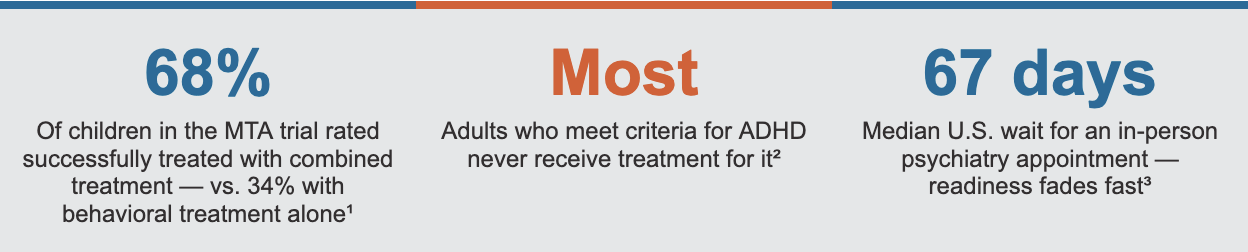
The frustrating part is that we know coordination works. This post lays out what the evidence shows, what real collaboration looks like in practice, and the questions worth asking any psychiatrist before you send them your clients.
The Evidence: Teams Beat Silos
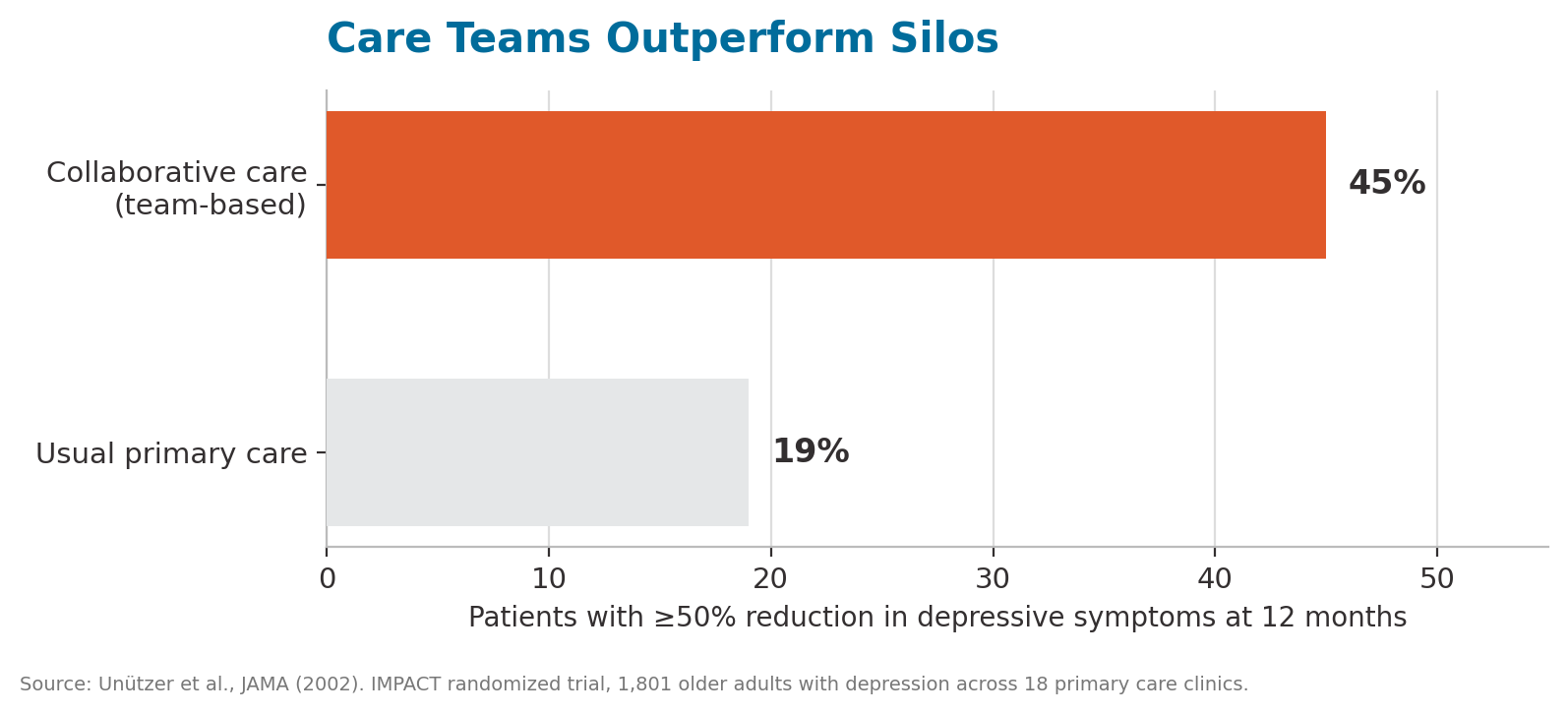
The best-studied model is collaborative care for depression in primary care. In the IMPACT randomized trial — 1,801 patients across 18 clinics — team-based care, in which a psychiatrist, care manager, and treating clinician actually communicated about shared patients, produced a response rate of roughly 45% at twelve months. Usual care produced 19%.¹ Same patients, same medications available, same evidence base. The difference was the structure: someone owned the follow-up, and the clinicians talked to each other.
Therapy-psychiatry collaboration is a different setting, but the mechanism transfers: shared patients do better when their clinicians operate as a team rather than as two strangers who happen to bill the same person.
What Real Collaboration Looks Like
- A closed loop after the first visit. With the client’s consent, you should hear that the appointment happened, what the working impression is, and what was started or changed. Silence after a referral is not neutrality; it is a coordination failure.
- Medication changes you hear about from the psychiatrist, not the client. You are watching the client weekly. If a dose changed, you are the early-warning system for both benefit and side effects — but only if you know.
- A reachable human. When you observe something concerning — activation, sedation, a mood shift — you need a channel that answers within a day or two, not a portal message into the dark.
- Respect for role boundaries in both directions. The psychiatrist does not restructure the therapy; you do not adjust the medication. Each of you knows what the other is doing and why.